Tuesday, October 16, 2007

Long wheelbase Jeep Grand Cherokee to replace Commander?

When the existing Jeep Commander goes out of production at the end of the decade, it will mark the end for the short-lived nameplate. That's because Chrysler has no plans to build a second-generation Commander.

Introduced at the New York auto show in 2005, the Commander will only go for one life cycle and cease production sometime around 2010. Slow sales and company reorganization — along with weak fuel economy and poor reviews — have doomed Jeep's seven-passenger 'ute.

However, Jeep will not let the seven-passenger market slip away. Once the Commander dies it will, in essence, be replaced by a long-wheelbase version of the next-generation Jeep Grand Cherokee. Further, the next-gen Grand Cherokee is set to be built on a chassis shared with Mercedes-Benz.

Sources indicated this is still the plan even after the separation of Daimler and Chrysler. Obviously Chrysler's new management wants to save wherever possible — sharing the cost of chassis development (which is hugely expensive) is a great way to do that. That said, it would be wise to keep in mind that Chrysler is still in the midst of a turn around and anything is possible.

Jeep sold 88,000 Commanders in 2006 thanks to heavy discounts, averaging between $6,000 and $8,000. Analysts suspect the Commander mostly cannibalized sales of the slightly smaller Grand Cherokee, rather than bringing in new customers. The company sold 139,000 Grand Cherokees last year, down 75,000 from the previous year.

Ford Taurus selling slow...

The new Ford Taurus (old 500) isn't selling too well. Ford was hoping to sell around 20,000 units each month.

The Taurus is the safest mid-sized sedan sold in the U.S at the moment.

September sales for the Taurus and the 500:

3,562 Tauruses were sold in September 2007 while 6,054 Five Hundreds was sold in the same month in 2006

Ford Europes sets new September sales record

September sales increased by 3.1 per cent to a record for the month of 179,200
Sales for the first nine months of the year increased by 70,300, to 1,384,500

Across its main 21 European markets, Ford sold a record 179,200 vehicles, a 3.1 per cent increase over September 2006. Market share improved to 9.8 per cent.
For the first nine months of the year, the company's sales increased by 5.4 per cent, to 1,384,500.

The Focus and Fiesta were Ford's top car models, selling 45,400 and 40,300 units respectively, while new Mondeo sold 18,350 units, its highest volume yet. Transit and Transit Connect dominated the company's commercial vehicle sales. Sales of the new Transit soared 5,300 units, to 21,200, with the Transit Connect improving by 700 units to 8,900 units.

Britain was the Ford's top market, selling 70,800 vehicles. Share in that country was a market leading 15 per cent. Elsewhere, Ford increased its sales in most of its main 21 markets, with particularly strong performances in Russia (+3,200) and in Italy (+1,265). Turkey achieved the company's highest market share, 17.8 per cent, with sales of 7,360.

"We enter the final months of the year in a strong position and we are optimistic that 2007 as a whole will be a year of significant sales progress for us," said Stephen Odell, Vice President, Marketing, Sales & Service, Ford of Europe.

Ford's sales data includes both passenger cars and commercial vehicles from its 21 major European Sales Companies, including Russia and Turkey. Market share excludes Russia.

New Car: 2008 Ford Focus Facelift


Winner of more than 80 awards and the only vehicle in the world to be named Car of the Year both in Europe and North America, Ford’s Focus has been something of a phenomenon since the launch of the original back in 1998.

Now in its second generation, with more than 1.1 million examples sold in the UK and a range which includes hatchback, saloon, estate and Coupé-Cabriolet derivatives, the Focus success story enters another chapter.

Following its unveiling at the Frankfurt Motor Show, Ford has announced that a new version of its family favourite will begin rolling off production lines from the end of 2007. Three-door, four-door, five-door and estate body styles will be first in UK showrooms, Coupé-Cabriolet and ST sporting flagship variants arriving in spring 2008.

Benefiting from Ford’s ‘kinetic design’ approach to styling, the 2008 Focus takes its inspiration from the critically acclaimed new Mondeo. The result is a classier and more distinctive appearance from a vehicle that’s now as exciting to look at as it is to drive.

Working from the front towards the rear, trapezoidal grilles, swept back headlamps, bold wheel arches, newly shaped rear glass, a contoured tailgate and new tail lamps are the key changes. Higher trim grades benefit from chrome detailing and a stylish, body-coloured upper rear spoiler.

Inside, the upmarket aura continues. New soft-touch plastics now cover the instrument panel as well as the upper front door trim and this is complemented by plush new seat fabrics plus a variety of attractive fascia finishing's. The instrumentation has been re-designed too and, along with all other interior controls, is illuminated in red. Controls for the upgraded audio equipment and two-zone air conditioning have also been ergonomically improved.

Furthermore, the Titanium now includes a newly designed centre console (optional with Zetec and part of the Sport Pack), which adopts the flowing 'kinetic design' look. In addition to a movable armrest and a four-litre-capacity storage compartment, there are storage areas for back-seat passengers or the facility to add optional items such as a 230 volt socket or the USB audio connection box. Another feature available as an option from the beginning of 2008 is the Ford Power Button, which will be positioned near the gear shifter.

The aesthetic appeal of Ford's latest Focus is matched by a range of mechanical introductions, including an all-new automated gearbox. The Ford PowerShift transmission will be available from early 2008 in the new Ford Focus as well as the Ford C-MAX, in combination with the 136PS and new 110PS versions of the 2.0-litre Duratorq TDCi engine.

Jointly developed by Ford and transmission specialists GETRAG, the gearbox consists of two layshaft transmissions working in parallel, each with its own wet clutch unit. Thanks to the layout of the intermediate shafts – one carrying the 'uneven' gears 1, 3 and 5, while the other one 'even' gears 2, 4 and 6 – the next gear change can be prepared by pre-selection whilst in motion and at full power.

As a result, in this configuration, the average fuel consumption improves by around 10 per cent, and CO2 emissions will be lower, compared to a conventional six-speed torque converter automatic transmission. Final homologated fuel economy and CO2 emissions data, as well as performance data for the Ford Focus with this new transmission technology, will be published closer to the car's market launch.

Another new development is the Focus "ECOnetic" which features an array of aerodynamic efficiencies and is powered by a 109 PS 1.6-litre Duratorq TDCi with standard Diesel Particulate Filter (DPF). Average consumption for the Focus ECOnetic is a frugal 65mpg. This corresponds to an average CO2 emission of only 115g/km, which is a class leading result for a conventional vehicle in this segment.

As a direct result of the Ford ECOnetic initiative, all Focus 1.6-litre TDCi variants will achieve 119g/km CO2 and this is regardless of power rating, body style or wheel dimensions. Flexifuel version of the 1.8-litre Duratec petrol four-cylinder engine can be fuelled with bio-ethanol E85-fuel as an alternative to conventional unleaded petrol – or in any mix of both. The Ford Focus range also includes CNG (compressed natural gas) and LPG (liquefied petroleum gas) derivatives both based on the 2.0-litre Duratec petrol engine.

The 2008 Ford Focus range will initially be offered across Studio, Style, Zetec and Titanium trim grades. More detailed information about the UK range and prices will be release close to the car's on-sale date.

Volkswagen Up! heading for production


Confidential documents leaked from Volkswagen have revealed the group’s expectations for its new breed of rear-wheel-drive small cars.

We got our first glimpse of this next generation at the Frankfurt motor in September, in the form of a cleverly-packaged, rear-engined city car concept called the Up!.

It’s expected to go into production in 2010 and will most likely be built at one of Skoda’s factory in the Czech Republic that is currently being modernised to cope with extra production capacity.

VW estimates sales of 4.1 million models over a nine-year lifecycle and considers this its biggest project since the original Beetle was phased out for the Golf in 1974.

Around 200,000 cars a year will be sold in Europe, badged as Volkswagens, Seats and Skodas. Developing markets such as Russia and India will make up a significant proportion of the remaining demand.

The production model based on the Up! concept will be cheap to buy and run, with three-door versions expected to cost around £6000.

Renault Vel Satis replacement to be built in South Korea

Reports are that Renault is planning a follow up to its mold-breaking Vel Satis executive sedan, joining an alleged roadster for release in 2009.

Renault Samsung Motors, a South Korean subsidiary of the French company, has been tapped to produce a high-end Vel Satis replacement for export markets, including France.

The new four-door vehicle will be produced in Butan, but sold under the Renault banner in Russia, the Persian Gulf, Latin America, and Western Europe.

A follow up to the critically acclaimed, but poor selling Vel Satis, the new sedan will join production of a new 4×4 for the Korean manufacturer. RSM plans to produce 170,000 vehicles this year, with plans for around 300,000 by 2010.

Monday, October 15, 2007

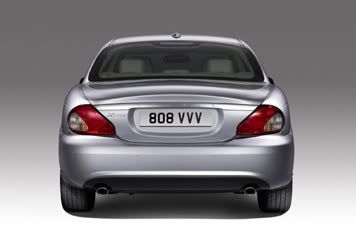
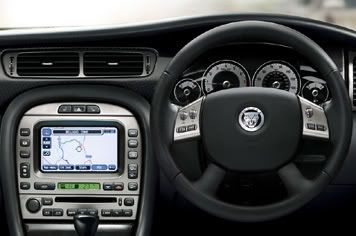
New Car: 2008 Jaguar X-Type


Jaguar’s X-type saloon is set to receive a fresh look that mimics the styling of its big brother, the XJ.

The new 2008 X-type makes its debut at the Tokyo motor show later this month. It’s not just the styling that’s different, either; almost 500 components have changed in the car, and the 2.2-litre diesel will be available with an automatic gearbox for the first time.

That should broaden the car’s appeal, especially as prices remain close to those of the current car.

But the X-type will no longer be available in America from March 2008, when the new XF saloon goes on sale.

The smallest Jaguar has struggled to sell in the numbers required in the US, and as of December this year, production of US-model cars will stop.

The new 2.2-litre diesel automatic will cost from from £22,500 for the saloon and £23,900 for the estate when the revised car goes on sale in the UK in March.